
Deep roots meet tighter margins for Indiana farm families
Deep roots meet tighter margins for Indiana farm families
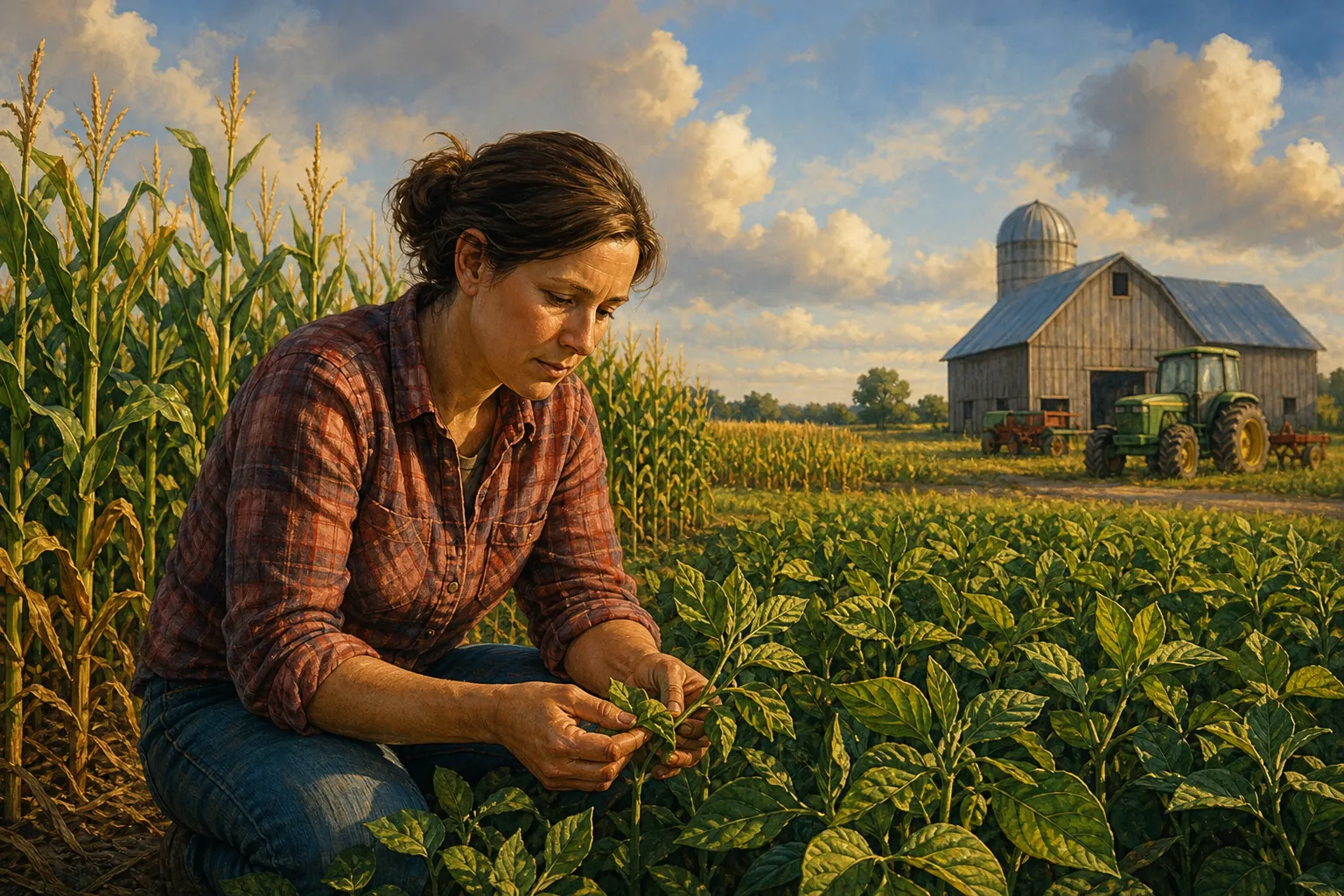
Deep roots meet tighter margins for Indiana farm families
Indiana farm families are entering the 2027 planning season with a mixed financial picture: statewide income projections point to tighter margins, while a national Purdue survey shows a modest improvement in producer confidence.
Purdue University’s Center for Commercial Agriculture said its spring Indiana outlook projected a 28% decline in state net farm income during 2026. The research attributed much of the pressure to weaker livestock receipts and higher production costs, with increased government payments offsetting part of the decline.
The outlook matters beyond individual farms. Agriculture supports equipment dealers, lenders, grain handlers, food processors and other rural businesses across Indiana. Lower farm income can restrict machinery purchases, expansion plans and hiring even when fields produce a strong crop.
THE MARGIN GAP
Purdue’s 2026 Crop Cost and Return Guide shows how narrow the economics have become on average-productivity Indiana soil. It estimates a $4.35-per-bushel harvest price for rotation corn against a $5.34 break-even price. For rotation soybeans, the expected $10.20 price remains below the estimated $12.47 break-even level.
The same crop budget projects earnings of negative $147 per acre for rotation corn and negative $86 per acre for rotation soybeans after variable costs, overhead and an assumed $50-per-acre government payment. Those figures are planning estimates, not results for every farm, but they help explain why producers may delay equipment purchases, press for lower cash rents or change crop plans.
2026 crop price versus break-even
Expected harvest price as a share of Purdue's estimated break-even price
View chart data
| Category | Value |
|---|---|
| Corn | 81 % of break-even |
| Soybeans | 82 % of break-even |
INDIANA’S FARM FOOTPRINT
The USDA’s 2022 Census of Agriculture counted 53,599 Indiana farms covering 14.6 million acres, with an average size of 272 acres. Compared with 2017, the state had 5% fewer farms, 2% less land in farms and a 3% larger average farm.
The longer trend is more pronounced. Indiana had 60,938 farms averaging 242 acres in 2007. By 2022, the farm count had fallen about 12% while average size had grown about 12%, a pattern consistent with consolidation and the high capital demands of modern agriculture.
Indiana farm count, 2007–2022
The number of farms declined about 12% over 15 years
View chart data
| Category | Value |
|---|---|
| 2007 | 60,938 farms |
| 2012 | 58,695 farms |
| 2017 | 56,649 farms |
| 2022 | 53,599 farms |
Average Indiana farm size, 2007–2022
Average acreage rose as the number of farms declined
View chart data
| Category | Value |
|---|---|
| 2007 | 242 acres |
| 2012 | 251 acres |
| 2017 | 264 acres |
| 2022 | 272 acres |
A LARGE 2026 HARVEST
USDA’s October 2026 Indiana overview estimated corn production at 1.032 billion bushels from 5.16 million harvested acres, based on a 200-bushel-per-acre yield. Soybean production was estimated at 354.69 million bushels from 5.63 million harvested acres, with an average yield of 63 bushels per acre. Strong output can support grain handling and processing activity, but high production does not guarantee strong farm margins when crop prices trail costs.
Purdue’s most recent Ag Economy Barometer found that producer sentiment improved slightly in October. The national index rose from 123 in September to 126, and the measure of current conditions increased by 16 points. The survey covered 400 agricultural producers from Oct. 12 through Oct. 16.
The improvement did not erase the financial strain. High input costs remained the leading concern among respondents. Purdue also reported that 62% of producers described their balance sheets as strong, down from 76% in January, while the Farm Financial Performance Index remained below its August peak.
Indiana’s farm economy also carries a longer view. The Indiana State Department of Agriculture’s Hoosier Homestead program recognizes farms that have remained in the same family for at least 100 years. The state offers centennial, sesquicentennial and bicentennial recognition for 100, 150 and 200 years of family ownership.
Those long ownership records show why farm finances are measured across generations as well as seasons. The decisions facing Indiana producers this winter include crop mix, operating loans, equipment spending and whether the next generation can take a larger role.
The next statewide farm-income update will help show whether harvest results and government payments materially changed Purdue’s spring projection. For now, the available data point to a year in which producer sentiment improved modestly while the underlying cost and margin pressures remained.
Report a correction · Editorial standards · Our source directory
BusinessIndy examines this development and its implications for Indiana businesses and communities using the linked sources.
Continued verification is in progress.
Sources
Developed from independently authored evidence with a verified research contribution. Prepared with AI assistance; source-dependent claims remain attributed in the article.
Related coverage
- Workhorse signs $10 million reference-unit deal for Union City plant
- Dexter Axle files notice of Elkhart closure affecting 51 workers
- Noblesville sets Nov. 12 open house on development plans and rules
Reader discussion
Join the discussion. Every comment is checked before publication. Community rules and appeals